
As 2026 approaches, the landscape of advertising outdoor is undergoing a dramatic transformation. The fusion of advanced technology with bold creativity is allowing brands to cut through the noise and capture public attention in entirely new ways.
This comprehensive guide is designed to help you navigate the changing world of advertising outdoor. You will discover actionable strategies and emerging trends to maximize your brand's impact and return on investment.
Whether you are a marketer, advertiser, or business owner, you will gain up-to-date insights, proven tactics, and data-driven approaches for success. We will explore the evolution of outdoor advertising, innovative formats, strategic planning, creative best practices, technology integration, measurement, and the future outlook—all structured to move you from attention to action.
The Evolution of Outdoor Advertising: 2026 and Beyond
The landscape of advertising outdoor is undergoing a remarkable transformation as we approach 2026. No longer confined to static billboards, brands are leveraging a dynamic mix of technology and creativity to capture consumer attention in a crowded world. This evolution is redefining how advertising outdoor delivers both impact and measurable results.

From Static to Digital and Interactive
The journey of advertising outdoor began with painted and vinyl billboards, but digital out-of-home (DOOH) formats now lead the way. Digital signage enables real-time content updates, letting brands respond instantly to trends, weather, or local events. Programmatic buying and data-driven targeting have elevated the effectiveness of advertising outdoor, making it possible to reach the right audience at the ideal moment.
Key milestones include the adoption of LED displays, integration with mobile data, and the emergence of interactive screens. These advances allow for personalized messaging and immersive experiences that were previously unimaginable in advertising outdoor.
Location Strategy and Audience Reach
Strategic placement remains central to advertising outdoor success. High-traffic locations such as city centers, transit hubs, and retail zones offer unparalleled access to diverse demographics. With rapid urbanization and increased mobility, consumers are spending more time outside their homes, boosting the visibility and frequency of advertising outdoor campaigns.
Brands use heatmaps and mobility analytics to identify optimal placements, ensuring their messages intersect with daily routines. This approach maximizes exposure and amplifies engagement, making advertising outdoor a vital touchpoint in the consumer journey.
Regulation, Privacy, and Sustainability
As advertising outdoor evolves, so do the regulations that govern it. Marketers must navigate a complex web of privacy laws, environmental standards, and local restrictions. Compliance with data privacy regulations is crucial, especially as targeting becomes more sophisticated.
Sustainability is now at the forefront of advertising outdoor strategy. Brands increasingly choose recyclable materials and energy-efficient LED displays to minimize environmental impact. Green initiatives, such as solar-powered billboards and carbon-neutral campaigns, are becoming industry standards.
Growth, Impact, and Real-World Examples
The impact of these changes is reflected in industry forecasts. By 2026, DOOH is projected to account for over 40% of total outdoor ad spend, according to the Statista Digital Out-of-Home Advertising Forecast. This rapid growth underscores the effectiveness of digital and interactive formats in advertising outdoor.
Leading brands are already capitalizing on these trends. For example, campaigns that use weather-triggered content or real-time social media integration consistently achieve higher engagement and recall rates. These innovations demonstrate how advertising outdoor continues to adapt, ensuring brands remain visible and relevant in an ever-changing environment.
Types of Outdoor Advertising: Formats That Drive Impact
The world of advertising outdoor is more dynamic than ever, offering brands a variety of formats to capture audience attention and drive measurable results. Understanding these formats is key to selecting the right mix for your campaign goals and audience.
Traditional Outdoor Formats
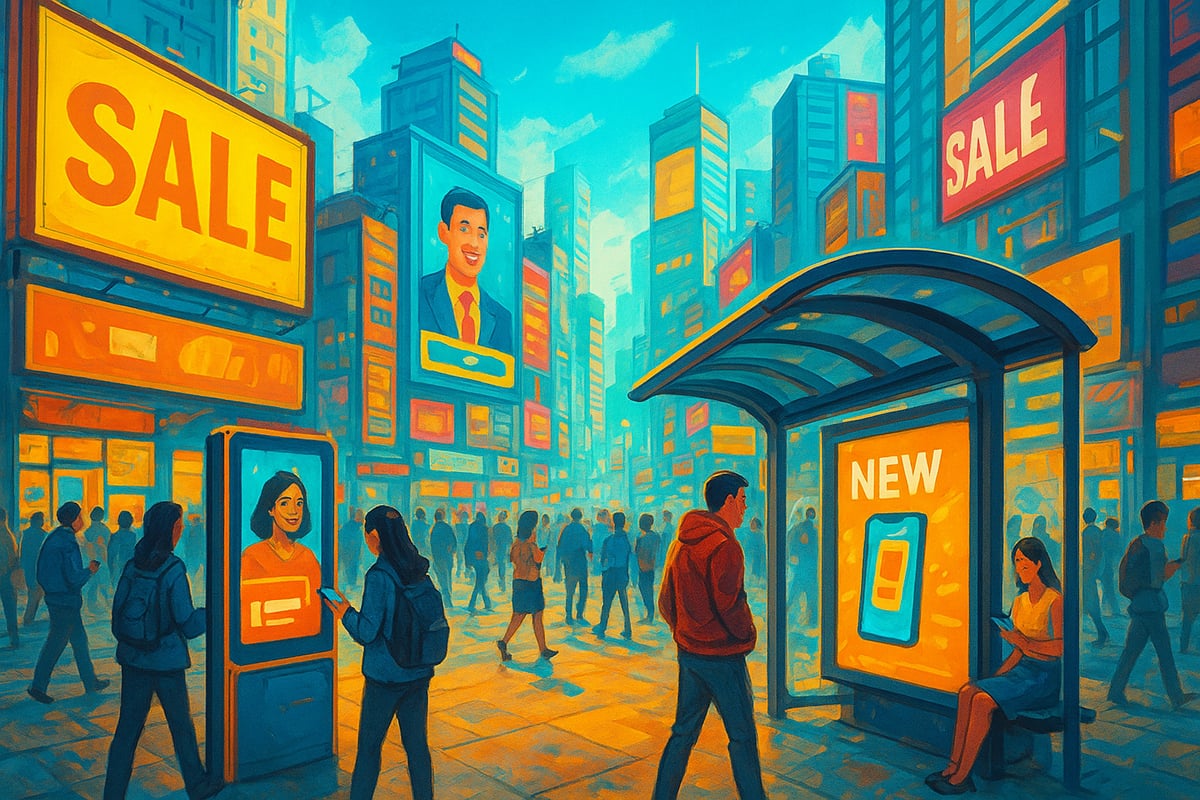
Traditional advertising outdoor formats remain the backbone of public messaging in both urban and suburban environments. Billboards, whether static, vinyl, or painted, offer enduring visibility along highways and in cityscapes. Their scale and location make them ideal for mass awareness.
Posters and banners are versatile tools, perfect for local events or time-limited campaigns. Transit ads—found on buses, taxis, and trains—reach mobile audiences throughout the day. Street furniture, like bus shelters, benches, and kiosks, allows for hyper-local targeting, engaging commuters at eye level.
A classic example is the Times Square billboards, which have become cultural landmarks and continue to influence global advertising outdoor strategies. Despite the rise of digital, traditional billboards still deliver high impressions in densely populated corridors, proving their ongoing relevance.
Advertisers often choose these formats for their reliability and broad demographic reach. The tactile presence of traditional displays builds trust and familiarity, making them a staple in comprehensive advertising outdoor campaigns.
Digital Out-of-Home (DOOH) and Emerging Technologies
Digital out-of-home is reshaping advertising outdoor with dynamic, real-time content and innovative technology. Digital billboards can refresh messages instantly, adapting to audience demographics or contextual triggers like weather or time of day.
Programmatic DOOH introduces automated buying and advanced audience targeting, allowing for cost-efficient and precise placements. Interactive screens, equipped with touch or motion-sensing capabilities, create immersive brand experiences. Augmented reality (AR) and 3D displays bring campaigns to life, captivating passersby with novel visuals.
For example, weather-triggered ads can show different products depending on local conditions, maximizing relevance. According to the OAAA 2025 Value of OOH Guide, DOOH engagement rates are twice as high as those of static formats, making it a powerful tool for modern advertising outdoor initiatives.
DOOH's flexibility and data-driven approach enable brands to optimize messaging and measure impact more accurately, supporting a shift toward smarter, more responsive campaigns.
Retail, Mall, and Point-of-Sale Outdoor Advertising
Retail and point-of-sale environments are prime locations for advertising outdoor strategies that influence immediate purchase decisions. Digital displays in shopping centers and retail parks highlight promotions and guide customer journeys, while wayfinding signage improves the shopping experience.
POS screens at gas stations or kiosks target consumers at critical buying moments. Retailers also use digital signage for flash sales and event announcements, driving foot traffic and urgency.
By integrating advertising outdoor with retail touchpoints, brands can deliver timely, actionable messages that convert intent into sales. This format leverages proximity to the point of purchase, maximizing ROI for product-focused campaigns.
Event, Stadium, and Venue Advertising
Large-scale venues present unique opportunities for advertising outdoor impact. LED screens at sports arenas and entertainment venues display real-time content, such as live stats, replays, sponsorships, and targeted promotions.
Brands engage audiences with interactive experiences, gamification, and social media integration. During global sporting events, major advertisers activate campaigns that connect emotionally with fans and amplify brand exposure.
Event-based advertising outdoor leverages high dwell times and concentrated audiences, creating memorable moments that boost recall and engagement. The energy of live events enhances message resonance and brand association.
Guerrilla and Experiential Outdoor Campaigns
Guerrilla and experiential campaigns push the boundaries of advertising outdoor by using unconventional placements and immersive technology. Pop-up installations, street art, and flash mobs surprise audiences and encourage organic sharing.
Digital projections and AR-powered bus shelter ads invite passersby to interact, creating viral, shareable moments. Studies show that guerrilla campaigns can increase brand recall by up to 30 percent, demonstrating their effectiveness in cutting through the noise.
These creative approaches foster authentic connections and generate buzz, making them a valuable addition to any advertising outdoor strategy. Brands seeking to stand out often turn to experiential formats to deliver lasting impressions.
Strategic Planning for Outdoor Advertising Success
Strategic planning is the backbone of any successful advertising outdoor campaign. In 2026, with evolving consumer behaviors and new technologies, a thoughtful approach is more essential than ever. Each element, from audience targeting to sustainability, contributes to maximizing impact and ROI.
Audience and Location Analysis
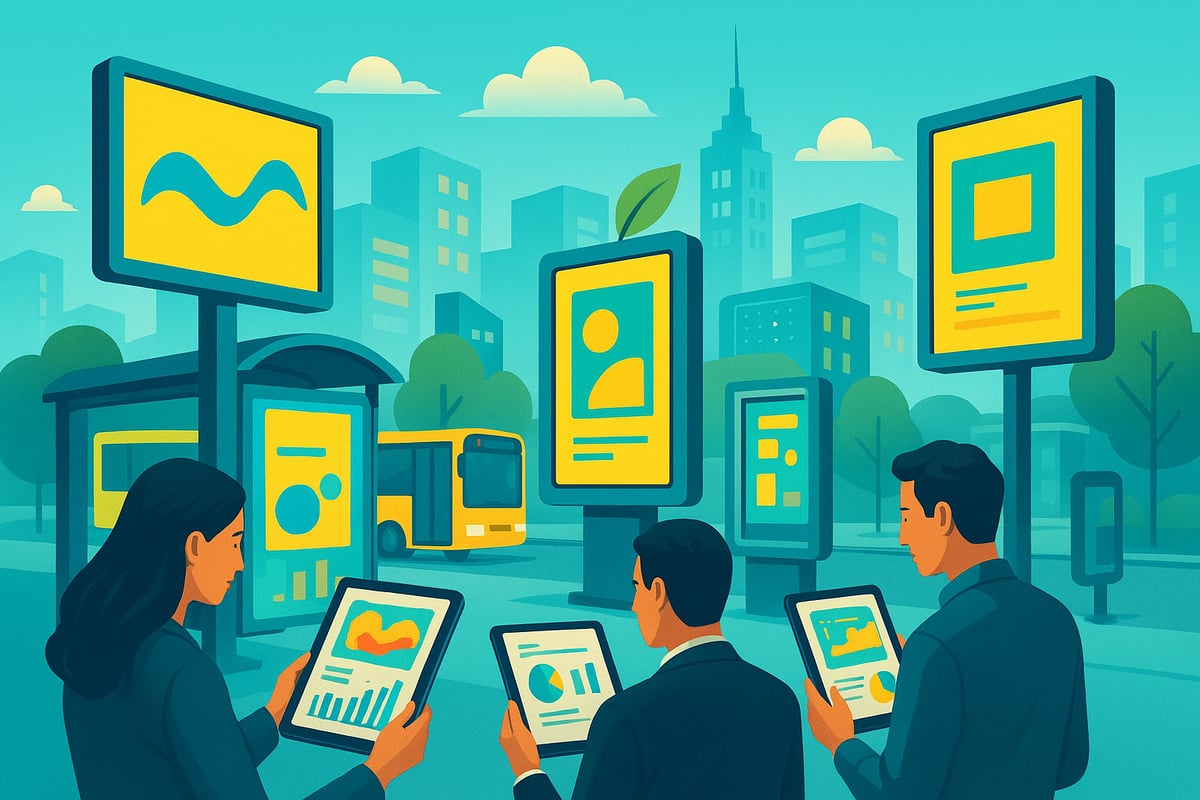
Effective advertising outdoor begins by identifying who you want to reach and where they are most engaged. Start by defining target demographics and psychographics, such as age, interests, and commuting habits. Use heatmaps and mobility data to uncover high-traffic zones, including shopping districts, transit hubs, and entertainment centers.
Analyzing patterns like foot traffic and dwell times helps prioritize locations with maximum exposure. For example, retail brands often select bus shelters near popular shopping areas to connect with active buyers. By aligning campaign placement with audience movement, your advertising outdoor efforts can achieve higher recall and engagement.
- Identify core customer segments
- Map daily commuter routes
- Evaluate location dwell times
Continually refine your location strategy based on real-time data and campaign results to ensure ongoing effectiveness.
Budgeting, Media Buying, and Scheduling
Allocating budget across various advertising outdoor formats is crucial for balanced reach and efficiency. Consider the mix of traditional and digital options, weighing cost per impression and audience targeting capabilities. Programmatic platforms streamline media buying, offering real-time bidding and automated optimization.
Plan campaigns to coincide with peak periods, such as rush hours or major local events, to boost visibility. According to the WPP 2025 Global End-of-Year Forecast, programmatic DOOH can reduce CPM by up to 25 percent compared to manual buys, making it a cost-effective choice for advertising outdoor.
- Set clear objectives and KPIs
- Allocate funds between static and digital placements
- Use data-driven scheduling for optimal timing
Monitor spending and adjust allocations as performance insights emerge.
Regulatory Compliance and Ethical Considerations
Navigating regulations is a critical aspect of advertising outdoor. Stay updated on local, national, and global guidelines that govern ad content, placement, and data usage. Privacy laws like GDPR and CCPA require advertisers to handle audience data responsibly, especially when deploying targeted digital campaigns.
Creatives must also reflect social and cultural sensitivities to avoid negative backlash. In cities with strict outdoor advertising restrictions, brands adapt by using permitted formats or focusing on transit and street furniture ads. Ethical practices build trust and protect your brand reputation in the competitive advertising outdoor landscape.
- Review and update compliance checklists regularly
- Train teams on evolving legal standards
- Engage local authorities for guidance on new campaigns
Addressing compliance proactively helps prevent costly disruptions.
Sustainability and Eco-Friendly Practices
Sustainability is becoming a defining factor in advertising outdoor strategies. Brands are adopting recyclable materials, energy-efficient digital screens, and solar-powered installations. These practices not only reduce environmental impact but also enhance brand perception among eco-conscious consumers.
Supporting green initiatives, such as running carbon-neutral campaigns or using biodegradable banners, signals a commitment to social responsibility. For instance, several companies have launched solar-powered billboards as part of their advertising outdoor efforts, drawing positive attention and aligning with broader sustainability goals.
- Choose recyclable or biodegradable materials
- Invest in solar or LED-powered displays
- Highlight eco-friendly actions in campaign messaging
Sustainable choices can differentiate your brand in a crowded marketplace.
Integrating Outdoor with Omnichannel Marketing
Maximizing the value of advertising outdoor requires seamless integration with other marketing channels. Sync campaigns across digital, social, and mobile platforms to create a unified brand experience. Technologies like QR codes, NFC tags, and geofencing bridge the gap between offline impressions and online engagement.
Track cross-channel attribution to understand how outdoor ads influence website visits, app downloads, or in-store purchases. For example, campaigns that drive social media participation via outdoor triggers often see higher engagement and measurable ROI from advertising outdoor.
- Link outdoor visuals to digital landing pages
- Encourage user interaction through mobile activations
- Measure performance with integrated analytics tools
A holistic approach amplifies reach and fosters deeper customer connections.
Creative Best Practices: Designing for Attention and Recall
Designing an effective advertising outdoor campaign in 2026 requires more than just visibility. Creative best practices are evolving rapidly, setting new standards for attention and recall. Brands that excel in visual storytelling, personalization, interactivity, and inclusivity consistently outperform their competition. In this section, we explore proven strategies and showcase examples that define creative excellence in advertising outdoor.
Visual and Messaging Optimization
Successful advertising outdoor campaigns start with strong visual and messaging fundamentals. Eye-catching visuals, high-contrast color palettes, and clear, concise copy ensure instant impact, even for fast-moving audiences. Tailoring the message to audience segments and context is essential for relevance.
- Use large, legible fonts and simple imagery to maximize readability.
- Harness bold color schemes for standout effect amid urban clutter.
- Apply storytelling elements to evoke emotion and drive brand recall.
Award-winning examples, such as minimalist billboards and iconic poster campaigns, prove that simplicity is often most memorable. For deeper insights on creative tactics, see Creative advertising strategies. By focusing on clarity and impact, advertising outdoor campaigns can cut through the noise and capture attention.
Personalization and Dynamic Content
Personalization elevates advertising outdoor by delivering contextually relevant messages. Leveraging real-time data, brands can dynamically adjust content based on time of day, weather, or audience demographics.
- Schedule content updates to align with local events or commuter patterns.
- Display weather-triggered offers or localized promotions for higher engagement.
- Use data insights to adapt visuals and messaging for specific locations.
Dynamic advertising outdoor displays increase relevancy and responsiveness, leading to stronger audience connections. For example, digital screens that change offers during sports events or traffic surges deliver timely value to passersby.
Interactivity and Engagement
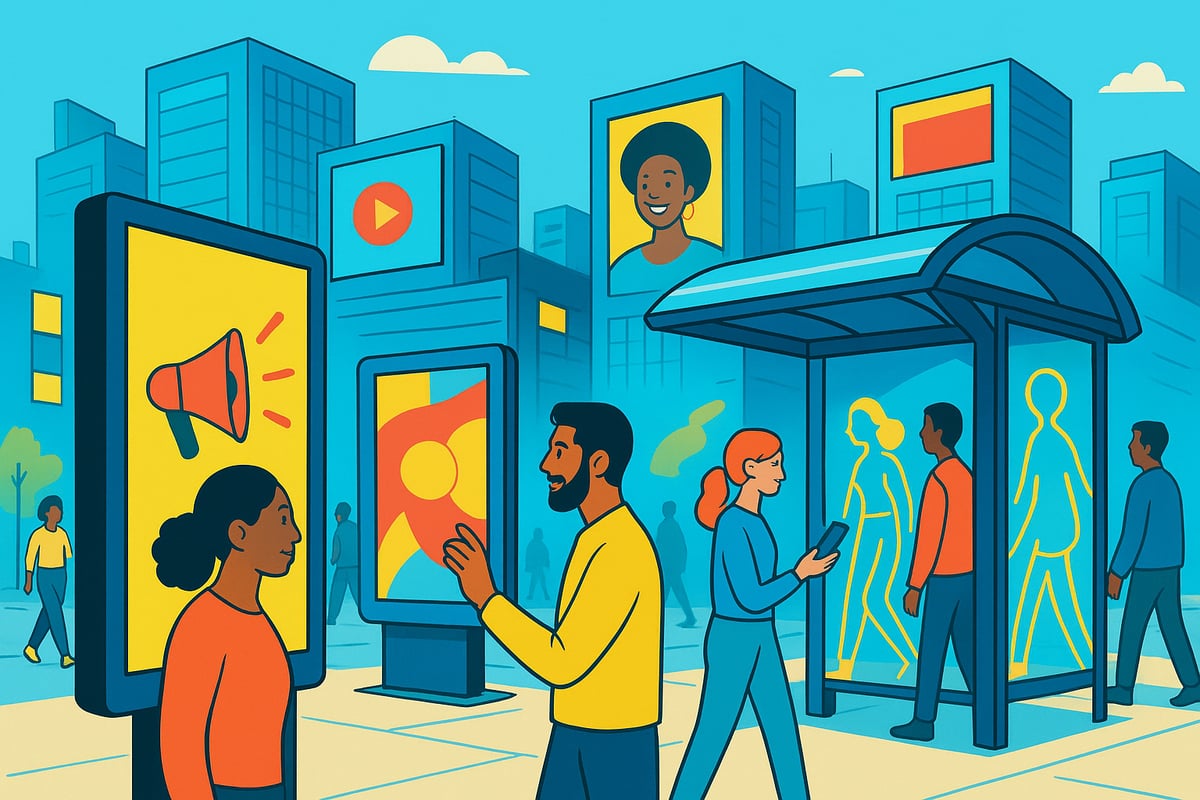
Interactive elements are transforming the advertising outdoor landscape, encouraging active participation and memorable experiences. Touchscreens, AR filters, and gamified campaigns invite audiences to engage beyond passive viewing.
- Integrate touch-enabled kiosks for instant feedback or product demos.
- Launch AR-powered ads that overlay digital content on real-world environments.
- Run contests or selfie challenges to boost social sharing and dwell time.
Industry data shows interactive advertising outdoor formats can increase dwell time by 20 to 40 percent. These experiences foster deeper brand relationships and generate shareable moments that amplify campaign reach.
Accessibility and Inclusivity
Effective advertising outdoor design prioritizes accessibility and inclusivity, ensuring everyone can engage with the message. Large fonts, clear icons, and accessible color schemes improve visibility for all viewers.
- Offer multilingual messaging in diverse urban settings.
- Incorporate audio cues or tactile elements for visually impaired audiences.
- Avoid complex layouts that hinder quick comprehension.
Campaigns that champion inclusivity not only reach broader audiences but also enhance brand reputation. By designing for everyone, advertising outdoor initiatives become more impactful and socially responsible.
Case Studies: Creative Excellence in Outdoor Advertising
Recent case studies from 2025 and 2026 highlight the power of innovation in advertising outdoor. Brands that blend dynamic visuals, interactive features, and inclusive design consistently set new benchmarks for creativity and results.
- A global beverage brand used AR-enabled billboards for interactive storytelling, resulting in a 30 percent lift in recall.
- Retailers implemented real-time, location-based offers, driving significant foot traffic during key shopping periods.
- City-wide campaigns featuring accessible design elements received industry accolades for reach and inclusivity.
These examples demonstrate how strategic creativity in advertising outdoor delivers measurable impact and lasting brand impressions.
Leveraging Technology and Data for Outdoor Advertising Impact
As we approach 2026, technology is fundamentally reshaping advertising outdoor strategies. Brands that embrace advanced tools and data-driven approaches are gaining a clear edge. Let us explore how the latest innovations are transforming every stage of outdoor campaign execution and measurement.
Programmatic Buying and Real-Time Optimization
Programmatic buying is revolutionizing advertising outdoor by automating the purchase and placement of digital out-of-home inventory. Brands can now target audiences with incredible precision, using real-time data to adjust campaigns instantly. Weather conditions, local events, and even traffic patterns can trigger content updates across the network.
For example, a beverage brand might increase cold drink ads during heatwaves, while a retailer can promote flash sales when foot traffic surges. This agility ensures that advertising outdoor remains relevant and cost-effective, delivering messages when and where they matter most. As a result, marketers achieve improved engagement and higher return on investment.
Advanced Audience Measurement and Analytics
The evolution of advertising outdoor means brands are no longer guessing at campaign impact. With sensors, mobile data, and artificial intelligence, advertisers gain granular insights into audience demographics, dwell times, and engagement rates. These metrics empower brands to refine targeting and creative in near real time.
Reliable measurement is crucial for accountability and optimization. Industry resources like the IAB DOOH Measurement Guide offer frameworks for tracking digital out-of-home effectiveness, from impressions to conversions. By leveraging these tools, brands can ensure their advertising outdoor investments deliver measurable results.
Integration with Mobile and Social Platforms
The synergy between mobile, social, and advertising outdoor channels is unlocking new engagement possibilities. Geo-fencing and beacons enable brands to retarget mobile users after they pass a digital billboard or interact with a smart kiosk. QR codes on outdoor displays drive instant app downloads or exclusive offers.
Social media integration amplifies reach, as campaigns encourage sharing user-generated content or participating in branded challenges. These cross-channel tactics not only boost campaign visibility but also provide additional data points for refining advertising outdoor strategies and tracking conversion paths.
Security, Privacy, and Data Ethics
With great power comes great responsibility in advertising outdoor. As data-driven targeting becomes the norm, brands must prioritize consumer privacy and data security. Encryption and anonymization techniques protect personal information throughout the campaign lifecycle.
Compliance with evolving regulations, such as GDPR and CCPA, is non-negotiable. Transparent communication about data usage and easy opt-out options build trust with audiences. By embedding ethical practices, brands safeguard their reputation while maximizing the benefits of technology in advertising outdoor initiatives.
Future Tech: AI, AR, and IoT in Outdoor Advertising
Emerging technologies are set to redefine advertising outdoor in 2026 and beyond. Artificial intelligence enables dynamic creative optimization, tailoring content to the audience and context in real time. Augmented reality overlays transform static spaces into immersive brand experiences, engaging passersby in interactive storytelling.
Internet of Things (IoT) connectivity links screens, sensors, and urban infrastructure to deliver context-aware messaging at scale. Smart city platforms will empower brands to launch responsive, hyper-local campaigns with unprecedented precision. Embracing these advancements is essential for brands aiming to lead in the next era of advertising outdoor.
Measuring Success: KPIs and Optimization Strategies
How can you tell if your advertising outdoor campaign is truly working? Measuring success is more than tracking impressions. It requires a clear understanding of key performance indicators, robust attribution models, and a commitment to ongoing optimization. Let’s walk through the essential metrics and strategies every marketer needs to master for maximum impact.
Key Performance Indicators for Outdoor Advertising
Selecting the right key performance indicators (KPIs) is the foundation of measuring advertising outdoor effectiveness. Core KPIs include impressions, reach, frequency, dwell time, and engagement rates. These metrics help you gauge how many people see your campaign, how often, and for how long.
Brand lift, recall, and sentiment analysis provide insight into how your messaging resonates with the audience. For direct response campaigns, sales uplift and foot traffic attribution are crucial. By monitoring these KPIs, you gain a holistic view of your advertising outdoor results.
Sample KPI Table:
| KPI | What It Measures | Why It Matters |
|---|---|---|
| Impressions | Total views | Awareness |
| Dwell Time | Time spent with ad | Engagement |
| Brand Recall | Audience memory of brand | Long-term impact |
| Sales Uplift | Change in purchases | ROI measurement |
Attribution and ROI Measurement
Proving the ROI of advertising outdoor requires precise attribution. Use unique URLs, QR codes, and promo codes to track direct responses from your ads. Mobile location data is invaluable for linking outdoor exposure to in-store visits.
Retailers often see in-store sales spikes aligned with outdoor campaigns. For example, a campaign using QR codes on digital billboards can directly attribute web traffic and conversions to specific locations. Combining these techniques delivers actionable insights into the true impact of your advertising outdoor efforts.
A/B Testing and Creative Optimization
To refine your advertising outdoor strategy, A/B testing is essential. Test different visuals, headlines, and formats to see what resonates most with your audience. Rotate creatives based on real-time analytics to maximize engagement.
Industry data shows that A/B tested DOOH creatives achieve up to 20% higher engagement than static content. Experimenting with color schemes, messaging, and layout helps identify the winning formula. Continual creative optimization ensures your advertising outdoor campaign stays fresh and effective.
Continuous Improvement: Learning from Campaign Data
The best advertising outdoor campaigns are never static. After each campaign, analyze post-campaign data to extract actionable insights. Look for patterns in audience behavior, peak engagement periods, and message effectiveness.
Apply these learnings to refine your next strategy. For instance, the City of Dade City outdoor campaign demonstrates how brands can evolve messaging and placements based on real-world results. Embracing a data-driven feedback loop leads to consistently improved outcomes for advertising outdoor initiatives.
Industry Benchmarks and Reporting
Comparing your results to industry benchmarks puts your advertising outdoor performance in context. Use standardized reporting frameworks to ensure transparency and accountability with stakeholders. For example, DOOH campaigns often outperform static ones by 30–50% in recall and engagement.
Stay updated on current trends and reporting standards by reviewing resources like Digital media advertising trends. This helps you identify opportunities to optimize your campaigns and set realistic performance goals. Effective reporting transforms campaign data into actionable business intelligence.
The Future of Outdoor Advertising: Trends and Predictions for 2026
As 2026 approaches, advertising outdoor is poised for dynamic transformation. Brands can expect rapid changes as audiences crave more relevant, engaging, and personalized experiences in public spaces. The future will be shaped by hyper-local, contextually targeted campaigns. Marketers will harness location data and real-time analytics to deliver messages tailored to specific neighborhoods, events, or even weather conditions.
Immersive Technologies and the Blurring of Physical and Digital
The boundaries between physical and digital are vanishing. Outdoor advertising is embracing 3D, augmented reality, and immersive formats to captivate urban audiences. Imagine a city square where passersby interact with lifelike holograms or use their phones to unlock AR overlays on building facades. Brands are also exploring the next frontier by advertising in the metaverse, connecting outdoor campaigns with virtual worlds for deeper engagement. This evolution signals a future where advertising outdoor is as interactive and memorable as any digital experience.
Integration with Smart Cities and Intelligent Automation
Smart city infrastructure is making advertising outdoor smarter and more efficient. IoT-connected screens, real-time data feeds, and AI-driven content optimization enable brands to deliver timely messages based on traffic flow, local events, or audience demographics. Automated programmatic buying will continue to streamline campaign management, ensuring that ads appear at the right moment for maximum impact. As cities become more connected, expect outdoor advertising to seamlessly blend into the urban environment, enhancing both utility and engagement.
Sustainability, Accessibility, and Social Responsibility
Sustainability is a top priority for the future of advertising outdoor. Brands are switching to recyclable materials, energy-efficient digital displays, and solar-powered billboards. Environmental messaging and carbon-neutral campaigns resonate with eco-conscious consumers. Accessibility and inclusivity are also gaining momentum, with campaigns designed for visibility and comprehension by all, including multilingual messages and tactile or audio features. These shifts ensure that outdoor advertising aligns with evolving societal values.
Regulatory Evolution and Industry Predictions
Regulatory landscapes are evolving to keep pace with new technologies. Stricter privacy laws, environmental standards, and local advertising restrictions will shape how brands plan and execute advertising outdoor. Creative freedom may be challenged, but proactive compliance will foster trust and innovation. Industry forecasts predict outdoor ad spend will grow by 8% annually through 2026, with DOOH dominating market share. Brands that adapt quickly to these trends will capture attention and drive results in an increasingly competitive landscape.
| Trend | Impact Area | 2026 Prediction |
|---|---|---|
| Hyper-local Targeting | Audience Relevance | Highly personalized messaging |
| Immersive Tech (AR/3D) | Engagement | Widespread interactive campaigns |
| Smart City Integration | Efficiency | Real-time, data-driven delivery |
| Sustainability | Brand Perception | Eco-friendly campaigns standard |
| Regulatory Changes | Compliance | Stricter privacy, content rules |
In summary, the next era of advertising outdoor will reward brands that embrace innovation, prioritize sustainability, and stay agile amid regulatory shifts. The stage is set for campaigns that not only capture attention but also create meaningful, measurable impact.
As we look ahead to 2026, outdoor advertising is evolving faster than ever—blending technology, creativity, and data to help your brand break through the noise. You’ve seen how strategic planning, innovative formats, and measurable results can shape real impact. If you’re ready to elevate your outdoor campaigns and want expert support tailored to your unique goals, I’d love to help you find the most effective path forward. Let’s discuss how you can make the most of these strategies and reach your audience where it counts. Let’s Connect