

Picture a bakery owner scheduling her weekly Google Business Profile update the way she has for the past year. A short caption, a bright promotional graphic, a photo of fresh croissants touched up with an AI editing tool. This time the post never appears. Neither does the next one. There is no warning letter and no dramatic suspension, just a quiet “post rejected” where her marketing used to be.
Versions of that scene are playing out across small businesses right now, and the rejections are not glitches. They are one of the clearest signs yet that the internet’s patience for machine-made content is running out. Call it AI fatigue. Audiences feel it, researchers are measuring it, and the platforms themselves are starting to act on it.

How Google Is Responding to AI Fatigue
Google’s rules for Business Profile media have always asked that images represent reality. What has changed is enforcement. Every upload now passes through automated review, and the filters have become noticeably better at catching AI-generated imagery, heavy retouching and unrealistic color treatments. According to a recent troubleshooting guide from ShiftFlow, post images are checked for significant alterations, AI-generated elements that misrepresent the business, and text treatments that interfere with the real image. That last point explains why so many stylized, text-heavy graphics are failing to publish right alongside the obviously synthetic ones.
Agencies that manage local listings have been watching the shift happen in real time. Posts that blend genuine photography with AI-generated backgrounds or enhancements are getting turned away. So are designed promo tiles that look more like ads than snapshots of a real place. Google has not issued a press release announcing a crackdown, but the pattern on the ground is consistent. If it doesn’t look like something a customer would actually see when they walk through your door, it may not post at all.
Google is hardly alone. In July 2025, YouTube renamed its “repetitious content” policy to “inauthentic content” to make clear that mass-produced, low-value uploads can’t earn money through its Partner Program. A few months later, Pinterest responded to a wave of user complaints about “AI slop” by adding controls that let people dial down generative AI imagery in categories like beauty, fashion and home décor. Pinterest cited research suggesting more than half of all online material is now AI-generated; it’s easy to see why its users were so vocal.
What the Data Says About AI Fatigue
The platforms are reacting to something measurable. In a Gartner survey of 1,006 U.S. consumers conducted this past spring, 65% said brands are producing too much AI-generated content, and 57% said it has made them less trusting of brand messaging overall. Research from The Harris Poll, the 4As and Infillion, reported by Marketing Brew, found that 78% of consumers believe AI makes ads feel less authentic. The same share said brands come across as cringey when they lean on it too heavily.
Some of the sharpest numbers come from companies with a stake in the answer, so they deserve a raised eyebrow. Video platform Animoto’s 2026 State of Video Report says 83% of consumers believe they can spot AI-generated video, and 36% say one would lower their opinion of a brand. Nearly 68% said featuring real people makes a video feel more authentic. Those are self-reported figures from a vendor survey rather than independent research, but they track closely with what Gartner and Harris found.
The most telling detail may be the trend line. Creator agency Billion Dollar Boy reported that consumer enthusiasm for AI-generated content has dropped from roughly 60% in 2023 to just 26%, even as most marketers plan to spend more on it. That gap between what brands are producing and what audiences actually want is where the opportunity lives.

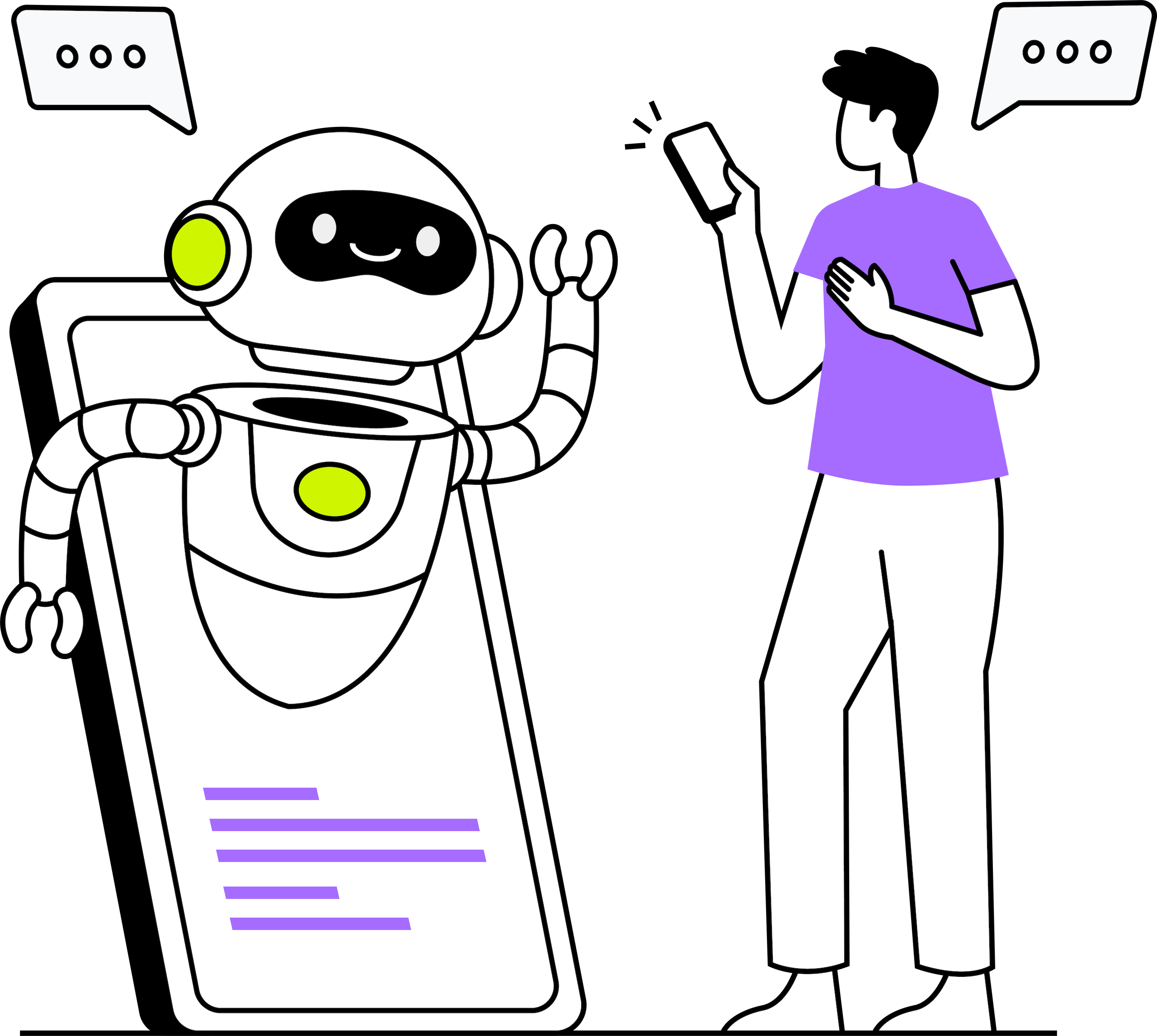
Man and woman developing chat bot. AI simulating conversation with human users over internet vector illustration. Online talking with Robot. Virtual mobile application assistance flat style concept
Cringe Marketing Rises as AI Fatigue Sets In
If polished, automated content is losing its grip, what’s taking its place? In some corners of the internet, the answer is surprisingly awkward. Cringe marketing describes brands that lean into deliberately unpolished, self-aware and occasionally ridiculous content. Think of the employee filming a deadpan product demo on a phone, the founder admitting on camera that a launch flopped, or the post that is a little too earnest on purpose. Wix marketing trend analyst Shachaf Rodberg points to online fatigue as a key driver. People are chronically online, and the content that breaks through is the content that doesn’t look like everything else.
Cringe is simply the loudest version of a broader shift. Lo-fi video, raw first-person storytelling and human-edited writing all share the same appeal: they carry fingerprints. A slightly shaky phone clip of a contractor walking a finished job site says something a flawless render never could. It says a real person was there.
That doesn’t mean every brand should start posting chaotic memes. A law firm that suddenly goes unhinged on social media risks confusing the very clients it needs to reassure. The lesson isn’t to be messy. It’s to be recognizable, which is why a clear brand foundation matters more now than it did before. You can’t sound like yourself if you haven’t decided who you are.
Fighting AI Fatigue Without Abandoning AI
Here’s the nuance that gets lost in the backlash: consumers aren’t rejecting AI outright. Gartner’s own analysts made that point, and even Animoto found that more than a third of viewers trust AI-generated video about as much as human-made work. What audiences object to is content that feels hollow, repetitive or deceptive. It’s the stuff that exists because it was cheap to make, not because someone had something to say.
For small businesses, that’s actually good news. The tools that let a solo owner draft a caption in seconds aren’t going away, and they don’t need to. The difference is who holds the pen at the end. AI can help organize an idea, suggest a headline or tidy up grammar. It can’t stand behind your counter, remember a regular’s name, or explain why you opened your doors in the first place.
It’s also why posting more isn’t the fix. Consistency alone won’t grow a brand if the content itself doesn’t connect. A dozen generic posts a month will lose to three honest ones, especially now that platforms are actively filtering the generic ones out.
What Authentic Marketing Looks Like After AI Fatigue
The practical shift is less dramatic than the headlines suggest. It means photographing your actual storefront, your actual team and your actual work, even when the lighting isn’t perfect. It means writing in a voice your customers would recognize if they heard it out loud. It means having a human editor, ideally one who knows your business, read everything before it goes live. On your Google Business Profile specifically, it means keeping promotional language in the caption instead of baking it into the image, and letting the photo simply show what’s there.
None of this is new advice, exactly. It’s the same principle that has always separated memorable brands from forgettable ones: relevance beats volume, and truth beats polish. What’s new is that the algorithms are now enforcing it.
That bakeryowner doesn’t need a better image generator. She needs a phone, a tray of croissants still warm from the oven, and a sentence or two about why she gets up at 4 a.m. to bake them. In a feed full of perfect, synthetic everything, that’s the post people will stop scrolling for. Want to discuss more? Let’s connect.
_______________________________________________________________________

About the author: Jennifer Frazier is a seasoned brand strategist, creative director, and senior copywriter with 30+ years of delivering high-converting results for the brands she and her team serves at The Creative Stable, a full-service advertising agency located in Dade City, Florida that she founded in 1990. She holds a Bachelor of Journalism and is a Certified Google Adwords, Google Analytics,Content Marketing, and StoryBrand Professional. She is a founding member of the Julo Enterpreneur Foundation, a multiple Silver, Gold, and Bronze Addy award winner, and a proud member of the East Pasco Chamber of Commerce.