
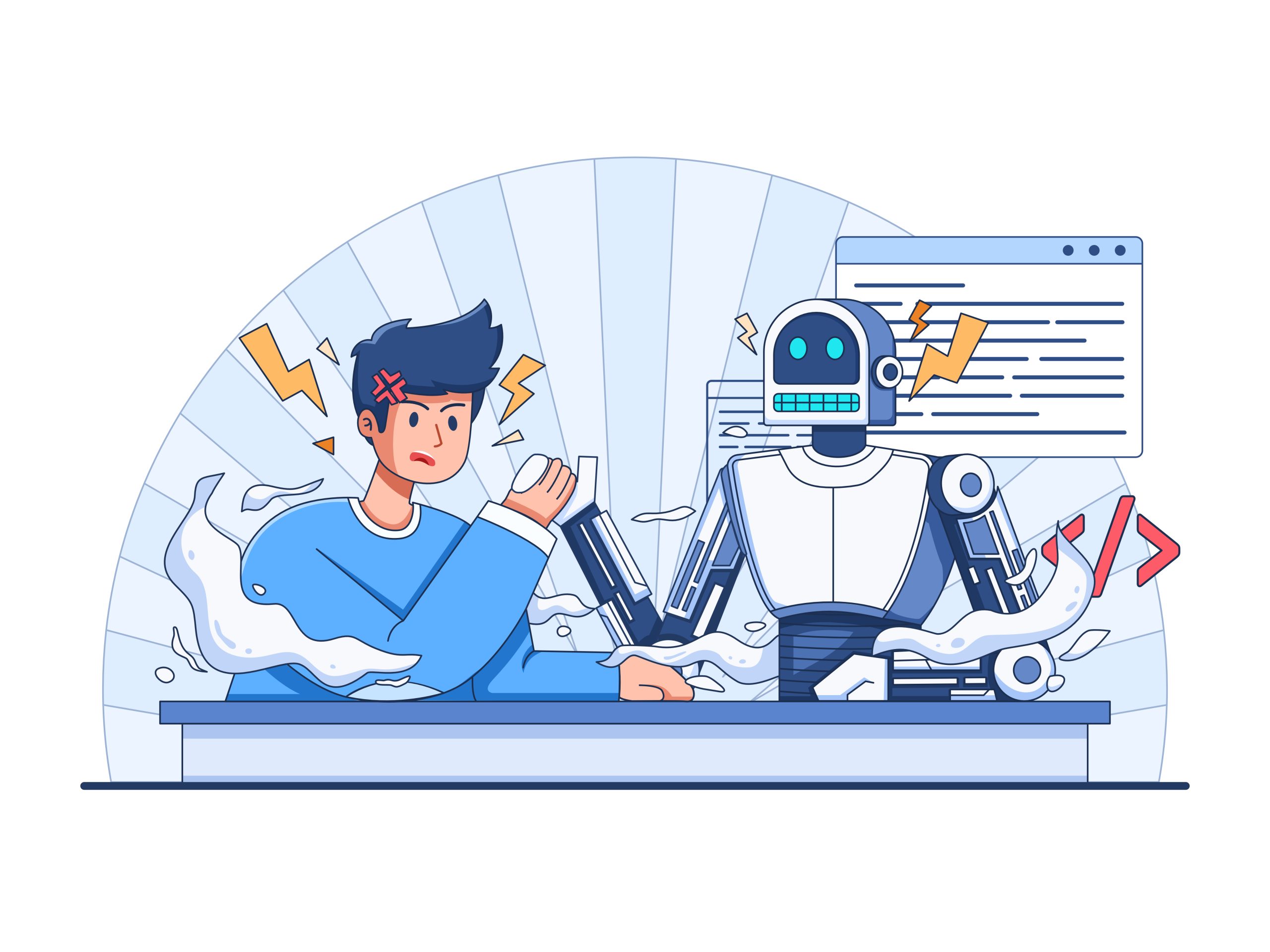
There’s a delicious irony at the heart of advertising right now. The industry that has spent decades perfecting the art of emotional storytelling, of making people feel something, is rushing headlong into a technology that, so far, tends to produce content that feels like nobody felt anything at all when they made it.
Welcome to the tension between AI in advertising and the one thing no algorithm has cracked: genuine human connection.
The numbers tell a striking story. According to a recent IAB study conducted with Sonata Insights, 83% of ad executives now say their company has deployed AI in the creative process, up from 60% the year before. Meanwhile, on the consumer side, trust is heading in the opposite direction. Kantar’s Media Reactions 2025 found that only 31% of people worldwide say social media ads capture their attention, which is a significant drop from 43% in 2024. More content, less connection. That’s the trap brands are falling into.
The Holiday Ad Cautionary Tale
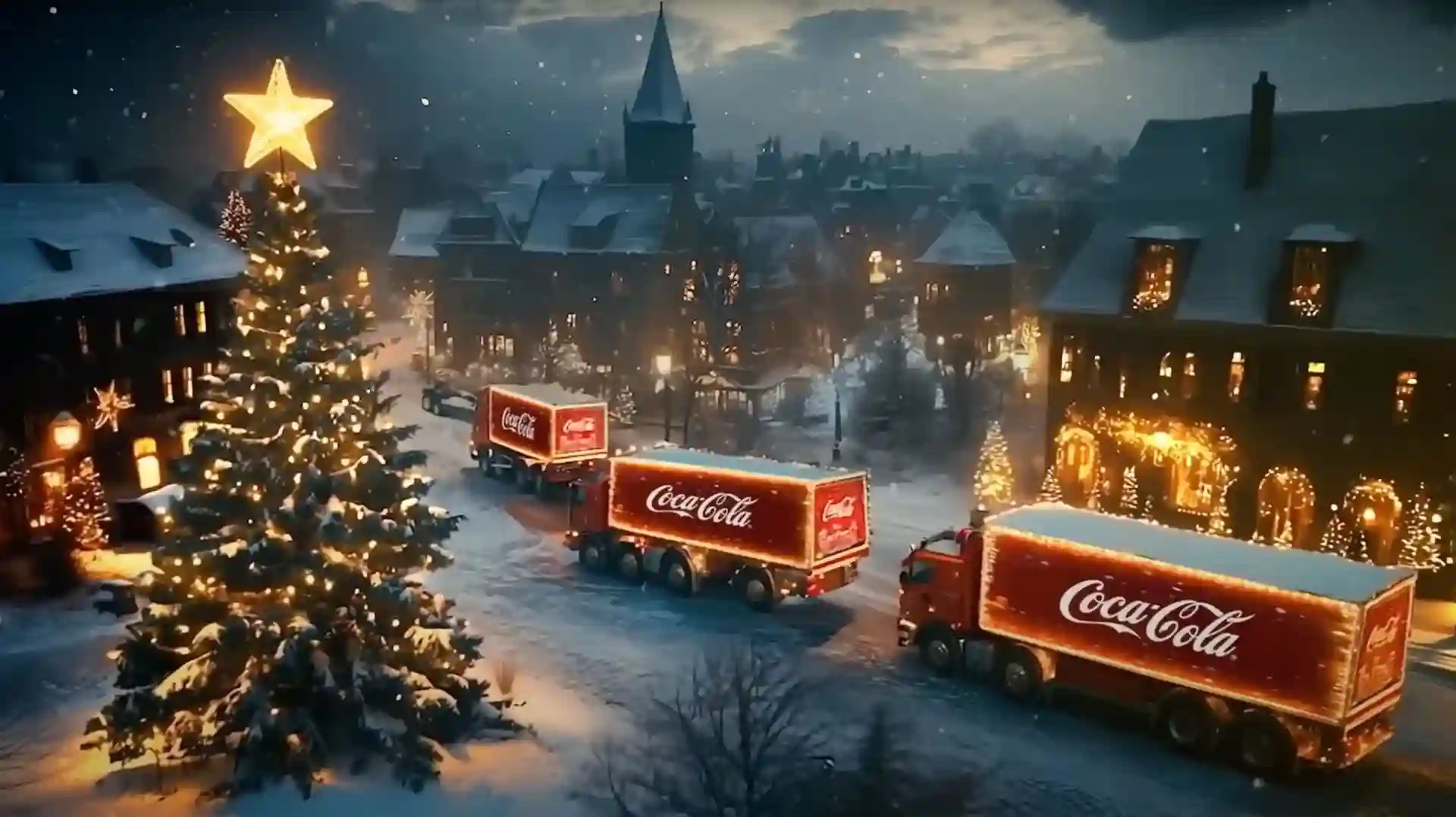
Nothing illustrates the authenticity problem quite like what happened during the 2024 and 2025 holiday ad seasons. Coca-Cola, one of the most storied brands in advertising history, decided to reimagine its beloved “Holidays Are Coming” campaign using AI-generated visuals. The 2024 version was slammed for “soulless” and “creepy” visuals, where characters appeared artificial and devoid of genuine emotion. The following year, they adjusted their approach by swapping human faces for animated animals, but still drew criticism.
McDonald’s Netherlands fared even worse. Their AI-generated holiday campaign was pulled shortly after launch due to intense online backlash, with viewers saying it “ruined Christmas spirits” and labeling it “AI slop.” A telling detail: production involved up to 10 in-house AI and post-production specialists over seven weeks, with each shot going through extensive iterative refinement. Critics were quick to point out that this level of time, expertise, and budget could have gone toward hiring real actors and crews to create more original, authentic content.
These weren’t small, experimental brands testing uncharted waters. These were some of the biggest advertising spenders on the planet. And they still got it wrong.
AI in Advertising and the Science of the Cringe
Why does AI-generated advertising so often miss the mark emotionally? Researchers are starting to map this out. A 2025 study from the Nuremberg Institute for Market Decisions found that simply labeling an ad as AI-generated makes people see it as less natural and less useful, which lowers ad attitudes and willingness to research or purchase. The effect is especially pronounced in certain contexts. The “trust penalty” (lower trust, weaker engagement, and more negative brand evaluation) appears most strongly when emotional stakes are high, cultural significance matters, and human craft is visibly valued.
Holiday advertising, by its very nature, lives in all three of those zones simultaneously. That’s why it keeps going wrong.
Professor Colleen Kirk of the New York Institute of Technology, whose research on consumer response to AI-generated marketing was published in the Journal of Business Research, puts it plainly: “Consumers are becoming ever more skeptical of the human origin of advertisements and marketing messages. While AI tools offer marketers an exciting new frontier, these professionals should bear in mind a time-tested principle: authenticity is always best.”

The Widening Gap
Here’s where it gets interesting for anyone in the creative industry. The IAB’s research reveals that advertisers are increasingly focused inward, concerned with the impact of AI on human creativity, implementation costs, and brand authenticity rather than on how consumers actually feel about AI-generated content. In other words, brands are becoming more preoccupied with their own AI journey than with whether their audiences are coming along for the ride.
The Association of National Advertisers recently made history by selecting two Words of the Year for the first time: “authenticity” and “agentic AI.” That dual selection isn’t a coincidence, it’s a diagnosis. The industry is caught between two powerful forces and the tension isn’t going away.
Transparency as a Strategy
Not every brand has gotten this wrong. Some are finding a smarter path: radical honesty about how their content is made. Vodafone, for example, released a short film openly marketed as “100% AI-produced, without a single real pixel.” By being upfront about the synthetic nature of their creative work, they positioned themselves as experimenters testing new frontiers rather than deceivers trying to fool audiences. When a subsequent AI-related controversy arose, they leaned into transparency again, and it worked. What could have been an authenticity crisis became a conversation about creative experimentation.
Brands that share how their content is generated are building greater loyalty and long-term trust, and authenticity is emerging as a genuine competitive advantage. One fashion brand reportedly generated significant buzz with a campaign built around a single tagline: “No AI. No Filters. Just Us.” In a world saturated with machine-made polish, that kind of declaration lands like a breath of fresh air.

What This Means for Creative Work
None of this means AI has no place in advertising. Of course it does. It’s genuinely useful for pattern recognition, optimization, scaling personalization, and handling production complexity. The question isn’t whether to use AI, it’s where and how, and crucially, what you allow it to replace.
The best brands are blending AI tools with content that sounds like it came from a person. It’s not about choosing between humans and machines. It’s about not losing your voice.
At The Creative Stable, this is something we think about a lot. Our work has always been rooted in the belief that great advertising comes from genuine insight about people, real human observations that create real human resonance. AI can accelerate the process of getting there. It cannot originate the insight itself. It cannot replace the experience of a strategist who has spent years understanding why people behave the way they do, or the instinct of a copywriter who knows which word will land and which will fall flat.
Consumers want stories, not scripts. They want to experience human emotion, not efficiency. That’s been true since the first advertisement was ever written, and no amount of computing power has changed it.
The brands that will win the next decade aren’t the ones who automate the most. They’re the ones who stay most stubbornly, committedly, strategically human, even as they use every available tool to tell that story better.
________________________________________
 Jennifer Frazier is a seasoned brand strategist, creative director, and senior copywriter with 30+ years of delivering high-converting results for the brands she and her team serves at the helm of The Creative Stable, a nearly 40-year-old, full-service advertising agency located in Dade City, Florida.