Let’s cut to the chase: AI content tools are everywhere, and if you’re not at least experimenting with them by now, you’re falling behind. But here’s what the glossy marketing materials won’t tell you: these tools are assistants, not authors. They’re collaborators, not creators. And no matter how sophisticated they become, they cannot, and should not, replace human oversight and authorship.
I learned this the hard way after testing a dozen different AI content platforms. Some delivered impressive drafts. Others churned out formulaic drivel that made me want to throw my laptop out the window. The difference? Not the AI itself, but how strategically we used it and how much human intelligence we layered on top. When left unattended, it was full of errors, omissions, lack of insight, and, uh well, just plain boring.
So if you’re a marketing team, small business owner wearing many hats, or the one on staff delegated to helping with content and are looking to scale content production without sacrificing quality or authenticity, this guide is for you. We’ll explore the top AI content generation tools in 2026, what they do well, where they fall short, and most importantly, where all this technology is taking us over the next five years.

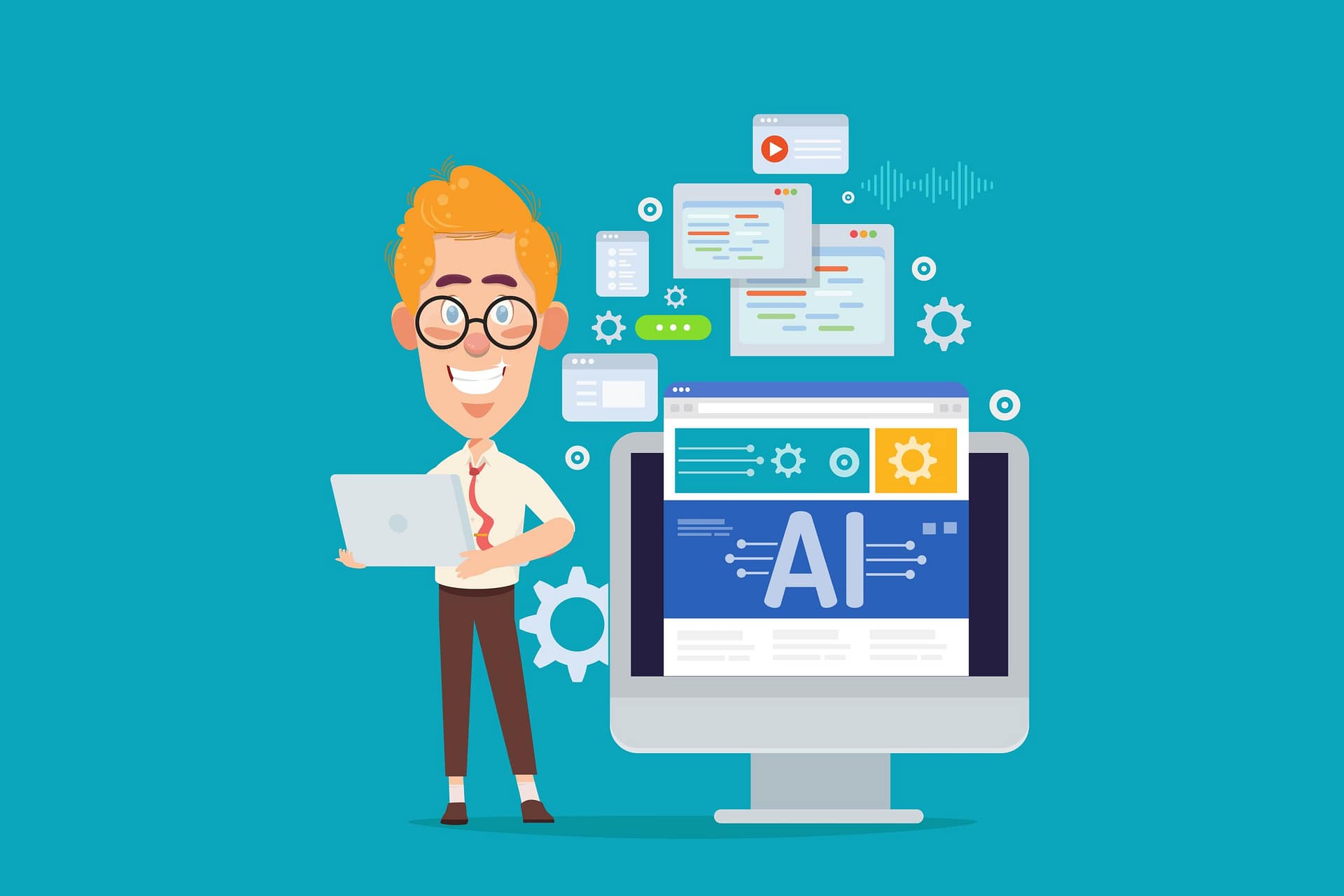
AI can help craft content, but people polish it
The Heavy Hitters: AI Tools You Need to Know
ChatGPT: The Swiss Army Knife
What it does: OpenAI’s ChatGPT (now at GPT-5) has evolved into a multi-modal powerhouse that writes, analyzes, codes, and creates marketing content across virtually any format. You can train custom GPTs for your specific brand, making it your in-house strategist, writer, and editor.
Pros:
- Incredibly versatile across content types and industries
- Custom GPT training allows for brand-specific voice and guidelines
- Conversational interface makes it accessible to non-technical users
- Free tier available with robust capabilities
Cons:
- Generalist approach means it lacks marketing-specific templates and workflows
- Doesn’t include built-in SEO optimization or competitor analysis
- Knowledge cutoff means you need to provide current data manually
- Output can be generic without detailed prompting and human refinement
Best for: Teams that need a flexible, all-purpose writing assistant for ideation, drafting, and brainstorming across multiple content types.
Claude: The Thoughtful Analyst
What it does: Anthropic’s Claude (currently Sonnet 4.5) excels at longer-form content, nuanced analysis, and maintaining consistent tone across complex documents. It’s particularly strong at understanding context and following detailed instructions.
Pros:
- Exceptional at long-form content and maintaining consistency
- Strong analytical capabilities for research-heavy topics
- Excellent at following complex, multi-step instructions
- More naturally conversational tone than many competitors
Cons:
- Less marketing-specific than dedicated tools like Jasper
- Requires thoughtful prompting to get optimal results
- No built-in templates for common marketing assets
- Limited native integration with marketing platforms
Best for: Content strategists and writers who need help with comprehensive guides, white papers, thought leadership pieces, and detailed analysis.
Jasper: The Marketing Specialist
What it does: Jasper positions itself specifically for marketing teams with its “Brand Voice 2.0” feature that learns your brand tone and ensures every blog, social caption, or ad reflects your identity. It now offers “Jasper Grid” and “Jasper Studio” for automated, end-to-end content workflows.
Pros:
- Purpose-built for marketing with 50+ templates for different content types
- Brand voice memory ensures consistency across channels
- Integration with Surfer SEO for optimized, Google-ready articles
- Team collaboration features and approval workflows
- Real-time content adaptation based on campaign performance
Cons:
- Higher price point than generalist tools (starting at $39/month)
- Some outputs still require significant editing for brand fit
- Learning curve for advanced features
- Template-driven approach can feel constraining for creative work
Best for: Marketing teams that need to scale multi-channel content production while maintaining brand consistency and SEO performance.
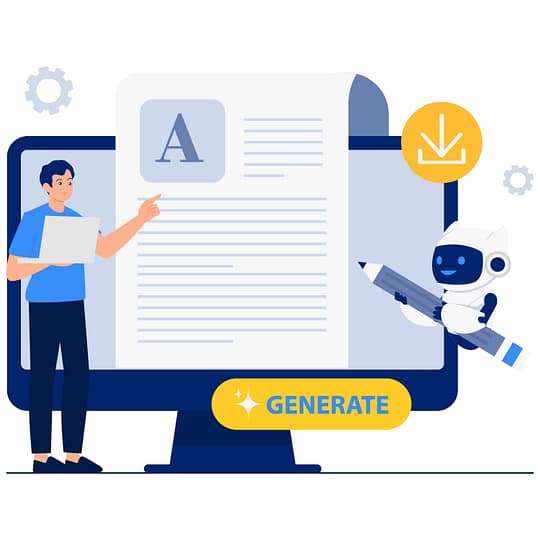
AI content cools can speed delivery, but require human oversight
Writesonic: The SEO Powerhouse
What it does: Writesonic evolved in 2026 into “SonicSuite,” a complete AI marketing platform offering blog generation, ad copywriting, chatbot creation, and image generation—all focused on search visibility and AI optimization (GEO – Generative Engine Optimization).
Pros:
- Comprehensive SEO and GEO tracking to monitor brand mentions in ChatGPT, Perplexity, and Google AI Overviews
- Real-time Google data integration for current keyword trends
- AI Article Writer 6.0 can produce 5,000-word comprehensive guides
- Integration with Ahrefs, Google Analytics, and Search Console
- Multi-language support (25+ languages)
- Affordable entry point (starts at $10/month)
Cons:
- Credit-based pricing system can be confusing and limiting
- Outputs often require heavy editing for natural flow and brand voice
- Customer support responsiveness has been inconsistent
- Interface can feel overwhelming with 80+ features
Best for: Growth marketers, SEO professionals, and agencies managing multiple clients who need data-driven, search-optimized content at scale.
Perplexity: The Research Engine
What it does: Perplexity isn’t a traditional content generator. It’s an AI-powered answer engine that combines real-time web search with advanced AI to deliver accurate, source-backed answers. Processing over 1.2 billion monthly queries, it’s redefining how people find information.
Pros:
- Real-time web crawling provides current, factual information
- Citation-based results with transparent sourcing
- Fast query handling (0.8 seconds on average)
- Pro Search mode for deep research with multi-step reasoning
- Can repurpose marketing assets (webinars to FAQs, blogs to social posts)
- Accessible via API for integration into workflows
Cons:
- Not designed for content creation—it’s a research and fact-checking tool
- Pro features require $20/month subscription
- Still developing its content repurposing capabilities
- Best used in combination with other tools, not as standalone solution
Best for: Marketing teams that need fast, accurate research, competitive intelligence, and fact-checking to inform their content strategy and creation.
The Emerging Contenders Worth Watching
While the big five dominate the conversation, several specialized tools are showing serious promise:
Copy.ai has evolved beyond simple copywriting into a full GTM (go-to-market) AI platform with its “Campaign Builder” that generates end-to-end campaigns—emails, landing pages, ads—in one click. It’s particularly strong for D2C brands and agencies needing conversion-focused copy at speed.
Surfer SEO leads the pack in AI-powered SEO tools, combining machine learning with real-time Google analysis. It doesn’t just optimize content—it tells you exactly what to write to rank.
MarketMuse uses AI to analyze your entire content inventory and map out topic clusters that boost topical authority and organic ranking. It’s strategic planning meets content optimization.
HubSpot’s AI suite has transformed into a centralized marketing intelligence hub that predicts campaign performance, automates audience segmentation, and generates insights. If you’re already in the HubSpot ecosystem, their AI tools are becoming increasingly powerful.
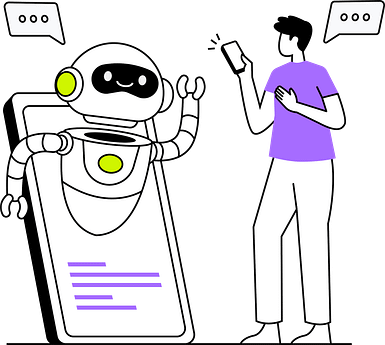
AI chatbots have given rise to AI content writers
Where This Is All Headed: The Next Five Years
Here’s where things get really interesting, and frankly, a bit unsettling.
2026-2030: What Marketing Teams Can Expect
1. Agentic AI Workflows Will Become Standard By 2027, marketing teams will be creating entire support teams using agentic workflows, which are AI systems that can execute multi-step tasks autonomously. Early adopters are already using tools like n8n and GPT AgentKit to build these systems. If you’re not implementing agentic workflows by 2027, you’ll quickly fall behind.
2. The Rise of Generative Engine Optimization (GEO) Traditional SEO focused on ranking in Google’s blue links. GEO is about getting your brand mentioned in AI-generated answers from ChatGPT, Gemini, Perplexity, and Google’s AI Overviews. By 2028, if your brand isn’t cited by AI engines, you might as well be invisible. This means creating content that’s trustworthy, well-sourced, and structured for AI comprehension.
3. Bot-to-Bot Marketing Will Reshape Customer Interactions Within three years, most interactions between brands and consumers may be bot-to-bot. our customer’s personal AI assistant talking to your brand’s AI customer service agent. This efficiency-driven shift will force marketers to rethink messaging, experience, and the customer journey entirely.
4. Hyper-Personalization at Unprecedented Scale AI will analyze massive customer data to create individualized content experiences for each user in real-time. We’re moving from segments of thousands to audiences of one. By 2029, 91% of consumers will expect this level of personalization as table stakes, not a premium offering.
5. The Critical Need for “Trust Ecosystems” As AI-generated content floods every channel, authentic human experiences and genuine expertise will become the ultimate differentiators. Brands will need to build “trust ecosystems”—networks of authentic, interconnected assets like interviews, behind-the-scenes stories, and expert insights that prove you’re not just another AI content farm.
6. Job Transformation, Not Job Loss Contrary to the doom-and-gloom predictions, most content marketing professionals won’t lose their jobs—they’ll transform them. By 2030, we’ll see:
- Content editors becoming “Quality Assurance Directors for AI”
- SEO specialists evolving into “Search Ecosystem Strategists” managing AI-to-AI communication
- Social media managers becoming “Community Intelligence Specialists” using predictive analytics
- Entirely new roles like “AI Content Trainers” and “Brand Agent Architects”
The Reality Check: What Won’t Change
Despite all this technological advancement, here’s what the next five years won’t change:
Authenticity still wins. AI can analyze patterns, but it can’t live experiences. Your brand’s unique perspective, your team’s real expertise, your customers’ genuine stories—these remain impossible for AI to replicate.
Strategy still matters. AI is a tool, not a strategy. The teams that thrive will be those that use AI to execute brilliant strategies faster, not those that let AI dictate what they create.
Human judgment is irreplaceable. AI doesn’t understand nuance, context, or brand risk the way humans do. Every piece of AI-generated content needs human review, editing, and approval.
Connection requires humanity. People buy from people. The emotional intelligence, empathy, and genuine care that build customer relationships can’t be automated away.
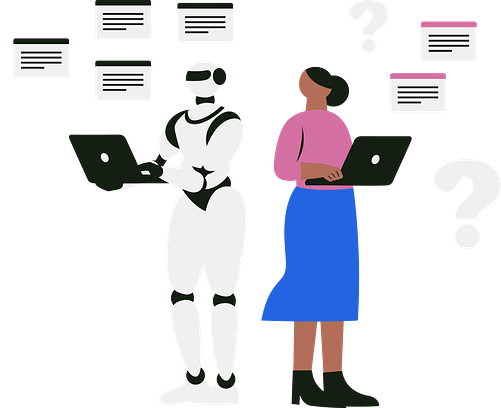
AI content writers are more prolific, but not more effective
The Bottom Line: Amplification, Not Automation
So here’s where we land: AI content generation tools in 2026 are powerful, sophisticated, and increasingly essential. They can 3x your content output, cut production time dramatically, and help you compete in an AI-saturated landscape.
But—and this is the crucial “but”—they work best when augmenting human creativity, not replacing it.
The teams seeing the biggest wins aren’t the ones using AI to churn out volume. They’re the ones using AI to:
- Free up time for strategic thinking
- Scale their unique expertise across more channels
- Test more variations and learn faster
- Focus human energy on the creative work that truly differentiates their brand
Your job isn’t to become an AI prompt engineer. Your job is to become better at what makes you irreplaceable: strategic thinking, authentic storytelling, genuine expertise, and human connection.
Use AI to amplify those strengths. Just never let it replace them.
Because at the end of the day, no matter how sophisticated these tools become, marketing is still about humans connecting with humans. And that’s something no algorithm can ever fully automate.
Ready to build a smarter content strategy that balances AI efficiency with human authenticity? Let’s connect.
 Jennifer Frazier is a seasoned brand strategist, creative director, and senior copywriter with 30+ years of delivering high-converting results for the brands she and her team serve.