
Did you know the average cost per click is projected to shift dramatically by 2026, creating both new challenges and opportunities for digital marketers? As advertising platforms evolve and competition intensifies, understanding your average cost per click is more crucial than ever for campaign success.
This comprehensive guide will break down what average cost per click truly means, how it is calculated, and why it matters for your business. You will discover up-to-date benchmarks across leading platforms and industries, learn which factors are driving costs, and explore expert strategies to optimize your campaigns.
Ready to navigate the increasing complexity of digital advertising? Dive in to unlock actionable insights and future trends that will help you maximize your return on investment in 2026.
Understanding Average Cost Per Click (CPC)
The average cost per click is a vital metric for every digital advertiser. It reflects the mean price paid for each click on an ad, directly influencing your campaign’s budget and performance. Whether you manage a small business or oversee enterprise-scale campaigns, understanding this metric is key to maximizing your advertising investment.
What Is Average CPC and Why Does It Matter?
Average cost per click is the mean amount advertisers pay for each click on their ads. It is calculated by dividing total ad spend by the total number of clicks received over a given period. This metric is distinct from actual CPC, which is the real amount charged for a specific click, and maximum CPC, which is the highest bid an advertiser is willing to pay.
Here’s a quick comparison:
| Metric | Definition | Typical Use |
|---|---|---|
| Average CPC | Mean spend per click over a time period | Budget planning, benchmarking |
| Actual CPC | Amount paid for an individual click | Live bidding, reporting |
| Maximum CPC | Highest amount you’re willing to pay per click | Bid strategy, control |
Why does average cost per click matter? It directly impacts your total ad spend and return on investment. For example, if you spend $600 and get 200 clicks, your average cost per click is $3.00. In 2025, the average cost per click on the Google Search Network was $2.69, while the Display Network averaged $0.63, according to industry data.
A high average cost per click can quickly drain your budget, especially in competitive sectors. Conversely, a very low average cost per click might signal poor targeting or low-quality traffic. Monitoring this metric helps businesses of all sizes fine-tune their budgets and bidding strategies for better results. For a more detailed overview, see Average Cost per Click: How Much Should You Pay?.
How to Calculate Average CPC: Step-by-Step
Calculating your average cost per click is straightforward. The formula is:
Average CPC = Total Cost of Clicks ÷ Total Number of Clicks
Follow these steps:
- Gather your total ad spend from your advertising platform.
- Retrieve the total number of clicks your ads received during the same period.
- Divide the total spend by the total clicks. For example, if you spend $300 on 150 clicks, your average cost per click is $2.00.
Most major platforms display this metric in their dashboards. In Google Ads, look under the “Campaigns” tab. Meta Ads (Facebook/Instagram) and Microsoft Ads also provide this data, though the layout may differ.
Common pitfalls include confusing average cost per click with CPM (cost per thousand impressions) or CPA (cost per acquisition). Accurate tracking is essential. Regularly calculating and monitoring your average cost per click helps you spot trends and identify optimization opportunities. This proactive approach ensures you’re not overspending and that your campaigns remain scalable and effective.
Average CPC Benchmarks by Platform and Industry
Navigating the digital advertising landscape in 2026 requires a clear understanding of how the average cost per click varies across platforms and industries. These benchmarks empower marketers to allocate budgets wisely, set performance targets, and identify opportunities for optimization.
Average CPC by Major Advertising Platforms
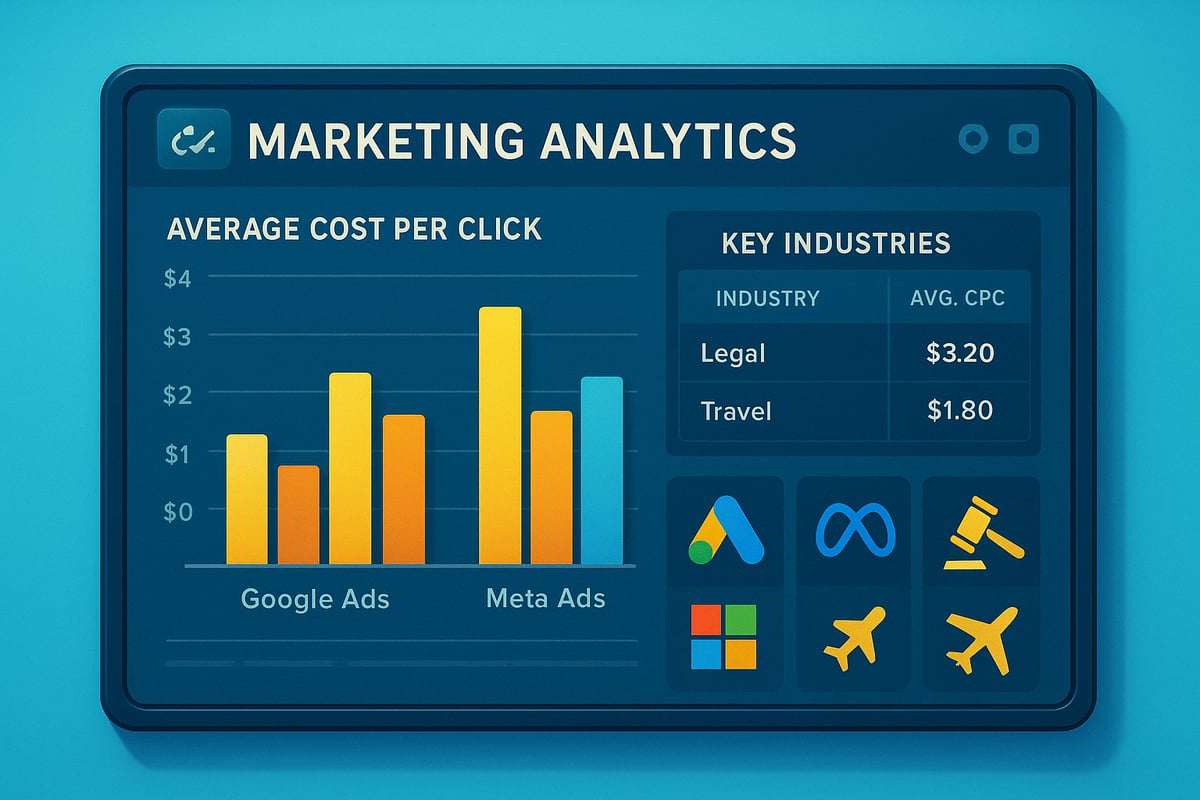
The average cost per click can differ significantly depending on where your ads appear. In 2025, Google Ads maintained its lead as the most widely used platform, but also one of the most expensive for advertisers. According to recent benchmarks, the Google Search Network reported an average cost per click of $2.69, while the Display Network averaged $0.63 per click. This difference stems from user intent: search ads target users actively looking for solutions, driving up competition and costs, whereas display ads focus on brand awareness and broader reach.
Meta Ads, which include Facebook and Instagram, offer a different pricing landscape. In 2025, Facebook’s average cost per click stood at $0.742, while Instagram’s was slightly higher at $0.989. These platforms typically provide lower average cost per click compared to Google Search, making them attractive for campaigns prioritizing reach and engagement over direct conversions.
Microsoft Ads, serving Bing and other partner networks, reported an average cost per click of $1.54. This is about 33 percent less than Google Ads, largely due to lower overall advertiser competition and a different user demographic. For some niches, Microsoft Ads can offer a cost-efficient alternative.
Here’s a table summarizing 2025 average cost per click benchmarks by platform:
| Platform | Average CPC (Search) | Average CPC (Display/Social) |
|---|---|---|
| Google Ads | $2.69 | $0.63 |
| Meta (Facebook) | — | $0.742 |
| Meta (Instagram) | — | $0.989 |
| Microsoft Ads | $1.54 | — |
Placement within a platform can also influence the average cost per click. For example, Meta Feed ads often have higher CPC but better conversion potential, while Stories placements may provide lower CPC but require different creative approaches. Understanding these nuances helps marketers choose the right mix of channels and placements for their objectives.
Trends suggest that as more advertisers compete for high-converting placements, the average cost per click on all major platforms is likely to rise in 2026. Regularly reviewing these benchmarks is essential to ensure your strategy remains cost-effective.
Average CPC by Industry: Key Variations
The average cost per click is also heavily influenced by the industry in which you operate. Some sectors face intense competition for keywords, driving up CPC, while others benefit from lower costs due to broader audiences or less aggressive bidding.
High-CPC industries include Attorneys & Legal Services at $8.58, Dentists & Dental Services at $7.85, Home Improvement at $7.85, and Education at $6.23. These sectors rely on high-value leads, so advertisers are willing to pay more for each click. In contrast, lower-cost industries such as Arts & Entertainment ($1.60), Restaurants & Food ($2.05), and Travel ($2.12) typically see less competition and lower average cost per click.
A quick comparison of industry CPCs:
| Industry | Average CPC (2025) |
|---|---|
| Attorneys & Legal Services | $8.58 |
| Dentists & Dental Services | $7.85 |
| Home Improvement | $7.85 |
| Education | $6.23 |
| Arts & Entertainment | $1.60 |
| Restaurants & Food | $2.05 |
| Travel | $2.12 |
The reasoning behind these variations is straightforward. Highly regulated or specialized sectors like legal and finance face bidding wars for a limited pool of qualified leads, inflating the average cost per click. Meanwhile, consumer-focused industries often prioritize reach and brand awareness, leading to lower CPCs.
Regular benchmarking is vital. By comparing your own data to industry standards, you can quickly identify whether your campaigns are underperforming or uncover opportunities for improvement. For deeper insights and up-to-date industry benchmarks, consult resources like Google Ads Benchmarks 2025: Competitive Data & Insights for Every Industry, which provide comprehensive tables and trends across verticals.
Ultimately, understanding where your average cost per click stands relative to both platform and industry benchmarks enables smarter budget decisions, more accurate forecasting, and more effective ad strategies.
Key Factors Influencing Average CPC in 2026
In 2026, understanding the forces that shape your average cost per click is essential for effective digital advertising. Several intertwined factors—from rising competition to rapid tech shifts—are reshaping what advertisers pay for each click. To navigate this evolving landscape, let us break down the most influential elements.
Competitive Dynamics and Industry Trends
The average cost per click is highly sensitive to shifts in competition and industry trends. As more brands enter lucrative niches, bidding wars intensify, driving up costs. For example, legal, finance, and healthcare sectors often experience the highest CPCs due to aggressive advertiser demand.
- Increased advertiser participation boosts competition for top ad placements.
- Economic trends, such as inflation or changing consumer priorities, can cause CPC to fluctuate.
- Seasonality plays a role, with costs spiking during holidays or major sales events.
- Device and timing factors matter—mobile searches or evening clicks may incur different CPCs depending on the industry.
Platform updates also have a direct impact. When Google or Meta adjust bidding algorithms or introduce new auction models, the average cost per click can change overnight. For a deeper dive into how major platforms influence these trends, see The great PPC shake-up.
Monitoring these dynamics lets you anticipate budget shifts and adjust your strategy, keeping your average cost per click in check.
Ad Quality, Targeting, and Relevance
Ad relevance and targeting precision are key levers for controlling average cost per click. Platforms such as Google assign a Quality Score based on your ad's relevance, expected click-through rate, and landing page experience. A higher Quality Score can significantly reduce your CPC.
- Crafting compelling headlines and copy improves engagement, lowering costs.
- Using negative keywords prevents your ads from showing on irrelevant queries, reducing wasted spend.
- Audience segmentation by interests or behaviors ensures your ads reach the right users.
For instance, focusing on long-tail keywords can attract more qualified traffic at a lower average cost per click. Regularly reviewing and refining your targeting parameters is crucial. This practice not only improves conversion rates but also stabilizes your average cost per click, making your campaigns more scalable.
Emerging Technological and Behavioral Factors
The technology landscape is evolving fast, introducing new variables into the average cost per click equation. Automated bidding powered by artificial intelligence can optimize bids in real time, but results depend on data quality and clear campaign goals.
- Smart bidding strategies, like Target CPA or Maximize Conversions, may inflate or reduce CPC based on performance signals.
- Privacy regulations, such as GDPR and stricter browser policies, limit data collection and impact targeting accuracy.
- Click fraud remains a threat, with bots and malicious actors artificially raising CPC and skewing analytics.
Advertisers must stay agile, monitoring these emerging trends and adapting quickly. For example, marketers who actively manage click fraud prevention tools and keep up with privacy changes are better positioned to protect their budgets and maintain a healthy average cost per click.
Trends Shaping Average CPC in 2026
The landscape of digital advertising is evolving rapidly, and understanding the trends shaping average cost per click in 2026 is essential for every marketer. As technology advances and regulations shift, businesses must stay agile to succeed in a competitive environment.
The Rise of AI and Smart Bidding
Artificial intelligence is becoming the cornerstone of bidding strategies across major ad platforms. Algorithms now analyze millions of data points in real time, adjusting bids to target high-value users and maximize conversions. As a result, the average cost per click is increasingly influenced by machine learning models that prioritize quality over quantity.
Marketers leveraging AI-powered tools see tighter alignment between ad spend and campaign objectives. However, reliance on automation can sometimes lead to higher costs if data quality is poor or if goals are not clearly defined. Staying proactive in monitoring these systems is crucial for optimizing results.
Evolving Privacy Regulations and Tracking Limitations
Privacy regulations like GDPR and CCPA continue to shape digital advertising. The gradual loss of third-party cookies is making it harder to target users with precision, leading to increased competition for high-intent audiences. This trend is expected to drive up the average cost per click as advertisers compete for limited data and more targeted placements.
Brands are shifting toward contextual targeting and relying more on first-party data. This pivot requires new strategies and often results in higher CPCs, especially in industries where user data is critical for personalization and retargeting.
Channel Diversification and New Ad Formats
With the digital ecosystem expanding, advertisers are exploring new platforms such as TikTok, YouTube Shorts, and retail media networks. Each channel offers unique ad formats, from interactive video to immersive shopping experiences, which can alter the average cost per click depending on audience engagement and competition.
For example, video ads may have a different CPC structure compared to standard search or display ads. Testing various channels and formats allows marketers to identify where their budget yields the highest return, while also adapting to shifting user preferences.
Economic and Market Forces
Macroeconomic trends, such as inflation and increased competition, are having a direct impact on the average cost per click. As more brands allocate higher budgets to digital advertising, bid prices rise across most platforms. In 2025, a report showed a 10 percent year-over-year increase in Google Ads CPC for several industries, reflecting this trend. For more insight, review the Google Ads costs rise again, but conversions improve: Report.
Monitoring market conditions and being ready to adjust strategies is vital. Marketers who regularly review economic indicators alongside CPC metrics are better positioned to protect ROI and adapt to shifting cost structures.
Industry-Specific Innovations
Certain sectors, such as legal, healthcare, and finance, are embracing advanced automation and personalization. AI chatbots, dynamic landing pages, and sector-specific technologies are becoming the norm. These innovations help improve ad relevance and user experience, which can lower the average cost per click by increasing engagement and conversion rates.
Industries with faster technology adoption often achieve more efficient CPC outcomes. Staying informed about innovations within your sector ensures your campaigns remain competitive and cost-effective as new tools become available.
Advanced Strategies to Lower and Optimize Average CPC
Lowering your average cost per click in 2026 requires a blend of technical expertise, creative optimization, and vigilant monitoring. As digital advertising becomes more competitive, businesses must adopt advanced tactics to maintain efficiency and maximize return on investment. The following strategies will help you systematically reduce your average cost per click, improve ad performance, and stay ahead in a rapidly changing landscape.
Quality Score and Ad Relevance Optimization
Improving your Quality Score is one of the most effective levers for lowering your average cost per click. Google rewards advertisers who deliver relevant ads and strong landing page experiences with reduced costs and better ad positions.
Key optimization steps include:
- Crafting ad copy that closely matches targeted keywords
- Organizing tightly themed ad groups for higher relevance
- Ensuring landing pages load quickly and deliver on ad promises
For example, A/B testing headlines and descriptions can boost click-through rates, which feeds into a higher Quality Score. The table below summarizes the potential impact:
| Quality Score | Potential CPC Discount |
|---|---|
| 10 | Up to 50% lower |
| 7 | Baseline |
| 3 | Up to 400% higher |
Regularly reviewing and refining ad relevance ensures your average cost per click remains competitive. Consistent improvements in ad structure and landing page experience compound over time, delivering substantial savings.
Keyword and Audience Targeting Refinement
Targeting the right keywords and audiences is essential for managing your average cost per click. Focusing on high-intent, long-tail keywords typically results in lower competition and more qualified traffic.
Consider these tactics:
- Use keyword research tools to uncover cost-effective long-tail phrases
- Continuously update your negative keyword list to exclude irrelevant queries
- Segment audiences by intent, behavior, or demographic data for precision
For instance, excluding terms like "free" or "cheap" in premium campaigns keeps your ads focused on valuable prospects. Pairing refined keyword targeting with audience segmentation leads to a more efficient average cost per click and better conversion rates.
Smart Bidding and Automated Strategies
Automated bidding strategies, such as Target CPA or Maximize Conversions, leverage machine learning to adjust bids in real time. While these tools can optimize for conversions, they can sometimes inflate your average cost per click if not properly managed.
Tips for effective automation:
- Set clear campaign goals and monitor performance daily
- Regularly review bid adjustments and automation rules
- Use robust conversion data to feed the algorithms
It is crucial to stay hands-on and intervene when automated strategies drift from your desired average cost per click. For a foundational understanding of automation in PPC, see Pay-per-click marketing essentials.
Creative and Placement Testing
Creative elements and ad placements can significantly influence your average cost per click. Testing different combinations helps identify the most cost-effective strategies.
Best practices include:
- Rotating various headlines, descriptions, and calls to action
- Experimenting with image, video, and carousel formats
- Comparing placements, such as Meta Feed versus Stories, to assess CPC and engagement
For example, Meta Stories often deliver lower average cost per click but may require unique creative approaches to drive results. Ongoing creative testing keeps your campaigns fresh and optimized.
Click Fraud Prevention and Budget Protection
Click fraud is a persistent threat that can artificially inflate your average cost per click and erode your advertising budget. Bots and malicious actors can account for up to 15% of paid ad clicks in certain industries.
To protect your campaigns:
- Implement click fraud detection and blocking tools
- Monitor for unusual spikes in click volume or suspicious patterns
- Regularly audit traffic sources for legitimacy
Platforms like ClickGuard offer real-time fraud monitoring and reporting. Proactive fraud prevention safeguards your average cost per click and ensures that your ad spend reaches genuine prospects.
Ongoing Performance Monitoring and Optimization
Consistent monitoring and optimization are the backbone of an efficient average cost per click strategy. Regular audits help catch issues early and reveal opportunities for improvement.
Effective habits include:
- Reviewing campaign performance metrics weekly or monthly
- Comparing your average cost per click to industry and platform benchmarks, such as those found in Google Ads Benchmarks by Industry
- Setting up alerts for abnormal CPC fluctuations
By making data-driven adjustments and benchmarking against leaders in your sector, you keep your average cost per click under control and drive sustainable growth.
Frequently Asked Questions About Average CPC
Understanding the average cost per click is essential for digital advertisers aiming to optimize their campaigns. In this FAQ, we address the most common questions marketers have about this critical metric.
What is a good average CPC?
A good average cost per click depends on your industry, profit margins, and conversion rates. For example, legal services often see averages above $8, while arts and entertainment can be as low as $1.60. Review your product margins and typical conversion rates to determine what "good" means for your business. Remember, a lower average cost per click does not always guarantee better results if the traffic is not converting.
Why is my average CPC higher than competitors?
Several factors can drive up your average cost per click compared to others:
- Increased competition in your niche
- Low ad relevance or poorly targeted campaigns
- Broad targeting, leading to less qualified traffic
- Click fraud or invalid activity inflating costs
For instance, industries like legal and finance tend to have higher CPCs due to intense bidding competition. Improving your ad quality and refining targeting can help lower your average cost per click over time.
How does automated bidding impact average CPC?
Automated bidding uses algorithms to adjust bids in real time, often focusing on maximizing conversions. This approach can sometimes raise your average cost per click if the system targets more competitive, high-value audiences. Strategies like Google’s Target CPA may increase bids to win more lucrative clicks. For a deeper look at how programmatic strategies influence costs, see our Google programmatic advertising guide.
Is a low CPC always better?
Not necessarily. While a low average cost per click can indicate efficient spending, it is not always ideal if those clicks are not converting. For example, $0.50 clicks with a 1% conversion rate are less valuable than $2 clicks with a 10% conversion rate. Focus on the relationship between CPC, conversion rate, and customer value, rather than chasing the lowest possible cost.
How can I benchmark my CPC?
Benchmarking your average cost per click involves comparing your results to platform and industry standards. Use sources like Wordstream and ClickGuard for up-to-date benchmarks, and review social media and advertising insights for data on platforms like Meta and Instagram. Regular benchmarking helps spot trends, identify underperformance, and uncover new opportunities.
What role does click fraud play in CPC?
Click fraud can significantly impact your average cost per click by driving up costs with invalid or automated clicks. In some industries, click fraud may account for up to 15% of paid ad clicks. Using click fraud detection tools and monitoring for suspicious activity is essential to protect your budget and ensure your CPC data remains accurate.
Are there CPC limits on major ad platforms?
Most ad platforms allow you to set maximum CPC limits when using manual bidding. Automated bidding strategies, however, adjust bids based on your goals and may not honor strict limits. For example, Google Ads lets you define your max CPC in manual campaigns, but automated options focus more on achieving your desired outcomes. Learn more about these settings in our Google programmatic advertising guide.
Navigating the ever-changing landscape of average cost per click can feel overwhelming, especially as trends and technology continue to evolve into 2026. You’ve now got a solid understanding of what impacts your CPC and actionable ways to optimize it for better ROI. If you’re ready to turn these insights into real-world growth or want expert guidance on refining your digital strategy, I invite you to take the next step. Let’s explore how a tailored approach—guided by decades of marketing expertise—can help you achieve measurable results. Let’s Connect